
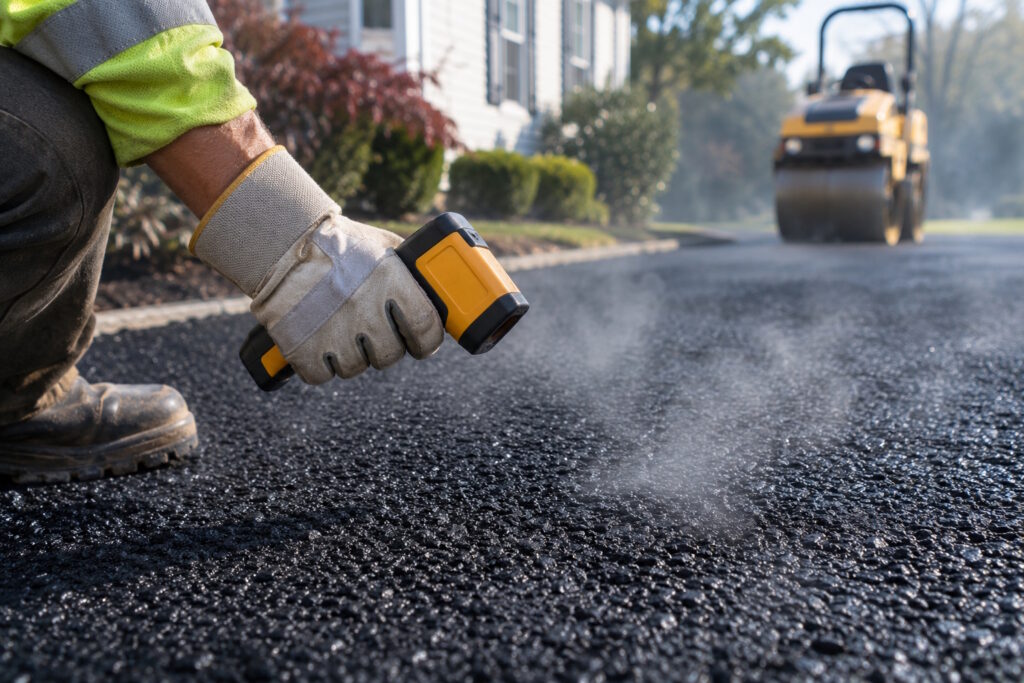
The Role of Temperature in Asphalt Paving and Maintenance
Temperature plays a major role in how asphalt is installed, compacted, cured, maintained, and repaired. For Long Island property owners, understanding asphalt temperature helps explain why paving is scheduled during certain weather conditions and why fresh pavement needs special care.
At PALERMO PAVING, we consider weather, surface conditions, and material temperature when planning asphalt work to ensure proper installation and long-term pavement performance.
Why Asphalt Temperature Matters During Installation
Hot-mix asphalt must remain hot enough to be placed, shaped, and compacted properly. It begins cooling from the moment it leaves the plant, so timing matters throughout the paving process.
Asphalt Must Be Compacted While It Is Workable
Compaction is one of the most important steps in asphalt paving. Rolling reduces air voids and helps the aggregate and asphalt binder form a dense, stable surface.
If the mix cools too quickly before adequate compaction is achieved, the finished pavement can be more vulnerable to:
- Premature cracking
- Water infiltration
- Raveling or loose aggregate
- Reduced structural strength
- Shorter pavement life
Air and Ground Temperatures Affect Cooling
A warm asphalt mix loses heat faster when placed on a cold base. Wind accelerates cooling, and thin asphalt lifts cool more quickly than thicker lifts.
That is why asphalt temperature involves more than simply checking the outdoor air temperature before work begins.
How Hot Weather Affects Fresh Asphalt
Warm conditions generally provide a longer compaction window, but extreme heat creates its own considerations.
Fresh Asphalt Can Temporarily Soften
Newly installed asphalt is particularly susceptible to tire scuffing, indentations, and concentrated loads during hot weather. High temperatures can soften the asphalt binder, making it important to avoid sharp tire turns while stationary and prolonged pressure from heavy objects, especially during the initial period after installation.
Trailer jacks, motorcycle and bicycle kickstands, and other small contact points can also place significant pressure on a warm surface.
For more on what happens after installation, see our guide to asphalt curing time.
How Cold Weather Affects Asphalt Paving
Cold weather shortens the amount of time crews have to place and compact hot-mix asphalt. A cold base and low air temperature can pull heat from the material quickly.
Why Timing Matters Late in the Season
Successful cold-weather paving depends on several factors, including:
- Pavement or base temperature
- Asphalt mix temperature
- Thickness of the asphalt layer
- Wind conditions
- Travel time from the asphalt plant
Asphalt paving is not limited to summer months. Depending on the weather, ground conditions, asphalt mix, and project requirements, paving may be performed during cooler seasons. The decision should be based on whether the material can be properly placed and compacted, rather than the calendar alone.
Temperature Also Matters for Asphalt Maintenance
Asphalt temperature and weather conditions influence repairs, resurfacing, and protective maintenance too.
Sealcoating Needs the Right Conditions
Unlike hot-mix asphalt paving, asphalt emulsion Sealcoating requires consistently favorable air and pavement temperatures, along with sufficient drying time. Cool temperatures, high humidity, rain and overnight moisture can interfere with proper curing. Sealcoating should only be scheduled when conditions meet the product manufacturer’s application requirements.
Repair Cracks Before Winter Makes Them Worse
Small cracks allow water into the pavement. When temperatures fall below freezing, trapped water can freeze, expand, and contribute to further deterioration.
Addressing damage early can help keep minor problems from becoming larger repairs. Our asphalt repair guide covers common driveway problems and maintenance considerations.
Seasonal Temperature Swings Affect Asphalt Over Time
Long Island pavement experiences summer heat, winter freezing, and repeated temperature fluctuations. Moisture entering cracks or reaching a weakened base can contribute to settlement, potholes, and surface failure.
Good grading, drainage, crack maintenance, and timely resurfacing help protect pavement from these cycles. When the upper surface is worn but the underlying structure remains suitable, asphalt milling and resurfacing may restore the pavement without complete replacement.
Temperature Is Only One Part of a Long-Lasting Paving Job
Proper asphalt temperature matters, but long-term performance also depends on site preparation, base stability, drainage, asphalt thickness, compaction, traffic loads, and ongoing maintenance.
Even a well-finished surface can struggle if water is trapped underneath it or the base was not prepared correctly.
PALERMO PAVING Handles More Than Asphalt
Asphalt paving is a major part of what we do, but PALERMO PAVING also offers a wide range of additional services to enhance your property. Our capabilities include asphalt driveways and parking areas, oil and stone surfaces, poured concrete, drainage improvements, driveway aprons, retaining walls, stone borders, walkways, patios, pool surrounds, and custom masonry work.
That means we can look at your property as a whole and coordinate improvements that work together functionally and visually.
Get a Quote From PALERMO PAVING
Whether you are planning a new asphalt driveway, repairing an aging surface, improving drainage, or upgrading your property with new hardscaping, proper timing and professional installation make a difference.
Contact PALERMO PAVING to discuss your project and request a quote. We will help you determine the right paving or hardscape solution for your Long Island property.
About the Author PALERMO PAVING
PALERMO PAVING is a family-owned-and-operated Long Island paving company. As such, we have a vested interest in our work. This translates into your paving project being done correctly and professionally. We pride ourselves in our expertise in paving, as well as our dedication to honesty and treating all customers with the care they deserve.